
Samurai, Ashigaru, Musketeer, Cavalry and the rest: what each troop type does, which stat matters for it, and where you can actually get one.
Sengoku Rance Unit Types: All 15 Troop Types Explained
Sengoku Rance has 15 troop types, and each one is a fixed stat block wearing a different job title. Your class sets base attack, defense, intelligence, how fast the unit acts, how large a troop it can lead and what its skills do — you never choose a stat independently of the class you recruited. Read one table, and you know what every unit on the field is for.
Two things trip up first-time players more than anything else. Cavalry is effectively Takeda-locked, so an early roster built around it stays empty for dozens of turns. And INT, not ATK, governs four classes outright — Ashigaru guard rates, Tactician buffs, magic damage and healing — which is why a stat-6 Onmyouji can matter more than a stat-6 Samurai.
Everything numeric below comes from the community AliceSoft Wiki, which documents the 2006 Japanese original (v1.04) and the MangaGamer English release of 2019. The official Steam build — appid 3867170, released October 1, 2026 — has not been independently re-tested against these tables, so read them as the best-documented model of the rules rather than a Steam-verified spec.
Official source: AliceSoft Wiki - Sengoku Rance: Parameters & Formulae (community-maintained from the 2006 original and the 2019 MangaGamer build; its class table and icon list are the source for every number on this page).
All 15 troop types: class constants and roles
| Troop type | Icon | Base ATK / DEF / INT | Delay | Max troop ratio | Recruit gold | Job |
|---|---|---|---|---|---|---|
| Samurai | Sword | 60 / 30 / 5 | 12 | 1.0 | 48 | Front-line damage and counterattacks |
| Ashigaru | Blue shield | 45 / 20 / 5 | 11 | 1.5 | 24 | Guard wall; redirects attacks onto itself |
| Tactician | War fan | 38 / 10 / 5 | 20 | 1.0 | 48 | Pre-battle buffs and buff removal |
| Archer | Bow | 40 / 15 / 5 | 15 | 1.5 | 36 | Ranged damage, row and all-unit attacks |
| Ninja | Shuriken | 38 / 15 / 5 | 6 | 0.7 | 60 | Fastest unit; cancels enemy preparation |
| Miko | Red cross | 35 / 10 / 20 | 16 | 0.7 | 72 | Heals, and percentage-max-health attacks |
| Sohei | Prayer beads | 50 / 30 / 20 | 20 | 1.0 | 36 | Slow melee that strips enemy guard |
| Onmyouji | Ofuda prayer slip | 35 / 10 / 40 | 14 | 0.7 | 60 | Magic damage and damage-negating barriers |
| Musketeer | Arquebus | 130 / 0 / 5 | 8 | 0.7 | 120 | Huge single-target damage, zero defense |
| Cannoneer | Cannon | 110 / 0 / 5 | 15 | 1.0 | 120 | Heavy damage that needs all your moves |
| Knight | Sword and shield | 60 / 30 / 5 | 14 | 1.0 | 56 | Guards like an Ashigaru, hits like a Samurai |
| Mage | Staff | 35 / 10 / 45 | 17 | 1.0 | 72 | Highest base INT in the game |
| Cavalry | Bird | 80 / 30 / 5 | 10 | 1.0 | 60 | Fast melee that reaches the back row |
| Animal | None | 38 / 0 / 5 | 15 | 1.0 | 72 | Single basic attack, no skill list |
| Monster | Red Hanny icon | Varies by colour | 11 | n/a | n/a | Enemy-only; four stat blocks, never capturable |
Delay is slowness, not speed — lower acts sooner. Delay 6 for a Ninja and 20 for a Tactician or Sohei is the gap you actually feel in the turn order. Onmyouji are the exception the community notes twice: their listed delay is 14, but the turn-order rules add only +4 for them where almost every other class gets +10, so they act early in a battle and then wait a long time afterwards. The class constants feed directly into the damage formulas broken down in the stats guide.
Three types sit outside this list because they are not recruitable troop classes: Peasant, Hanny and Infected (officially translated as Soul Binder Victim). All three have 35 or lower base attack, zero defense, and N/A recruit costs — they are flavour and event units, not army pieces.
Front row and back row: three classes waste a back-row slot
Placement is not cosmetic. The community game mechanics page states it plainly: Samurai, Ashigaru and Musketeers can attack only from the front column, while ranged units such as Archer and Ninja act from either column. The same front-row-only rule is restated in the skills list by the fact that those three classes have no ranged attack at all. Put a Musketeer in the back row and it is a dead slot that still eats National Power.
| Troop type | Can attack from back row | Notes |
|---|---|---|
| Samurai | No | Front row only |
| Ashigaru | No | Front row only, and it guards the column it stands in |
| Musketeer | No | Front row only |
| Archer | Yes | Full row attacks and all-unit Volley |
| Ninja | Yes | Cancels preparation on every basic attack |
| Cavalry | Yes | Reaches the back row with its basic attack |
| Onmyouji | Yes | Prepared attacks hit all enemy units regardless |
| Miko | Yes | Ranged bow attack comparable to an Archer's |
| Sohei | No | Melee, and tied with Tactician for the highest delay in the game |
| Tactician | Support only | Buffs are applied before the battle starts |
| Animal | No | Its one attack cannot hit the back row |
| Cannoneer, Knight, Mage | Not documented | The wiki gives no row rule for these three |
The wiki does publish a conjectured dungeon-swap priority list that marks Tactician, Onmyouji, Miko, Archer, Cannoneer and Mage as unsuitable for the front row, and Samurai, Musketeer, Knight and Cavalry as unsuitable for the back. It sits under a heading that explicitly says the tips were spotted while reading code and should be taken with salt, and it governs dungeon and commander battles, not map battles. Use it as a nudge, not a rule.
The stat that governs each class
ATK moves physical damage ten per point and DEF moves physical defense eight per point. INT is the one people misread, because it does four separate jobs depending on the class.
| Class | What one point of INT does |
|---|---|
| Ashigaru | Ally Guard adds INT x 20% guard chance; Neo Ally Guard x 30%; All Guard x 10% for the whole party |
| Tactician | One extra pre-battle buff, plus 5% buff strength |
| Onmyouji and Mage | Magic damage, on top of the standard INT x 10 damage and INT x 7 magic defense |
| Miko and Sohei | Healing, through the (INT x 6)% term |
The formula page carries a footnote saying it is unclear whether the 20 base INT on these two classes affects any of their skills, healing included. Plan Miko around their skills and troop count, not around an INT number the wiki itself will not vouch for.
Two more class-specific facts worth knowing. A tactician's buff priority is fixed: Ashigaru receive DEF first, Onmyouji receive INT first, and Samurai, Musketeers and Archers receive ATK first. And every buff attempt is capped at 29 evaluations in the code, so a huge Tactician does not hand out unlimited buffs.
Conversely, ATK past 6 or 7 is dead weight on Cavalry, Musketeers and Cannoneers, because their damage is capped by troop count. The full stat breakdown is on the stats guide; how the battle rating turns these numbers into a win is the next thing to read.
Where each type actually comes from
There is no shop where you buy a Cannoneer. Four documented routes exist.
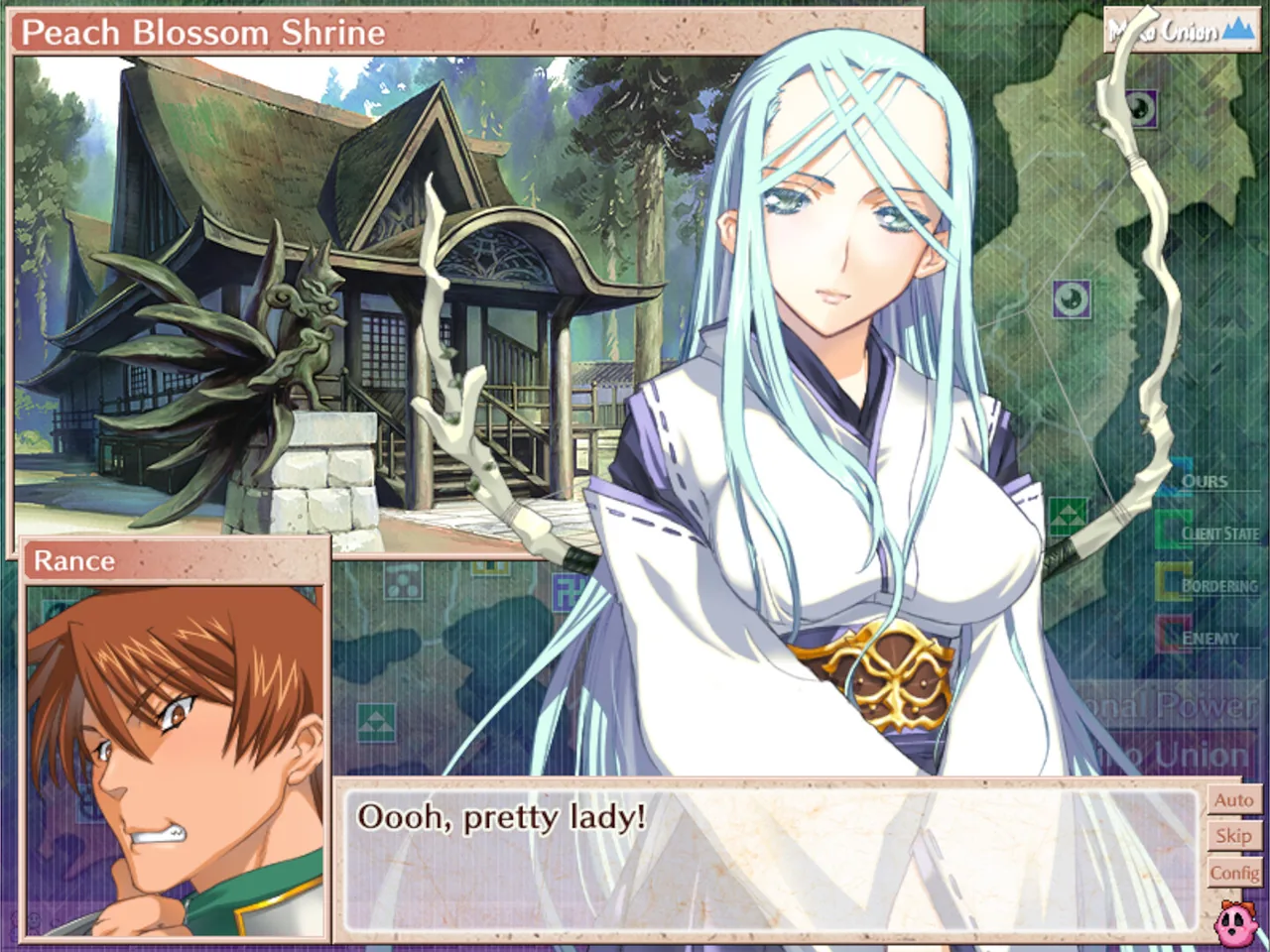
| Route | What it gives |
|---|---|
| Talent Search, a yellow command in any province you own | Recruits a unit of the class you name. The general-purpose source |
| The ronin pool, filled by conquest | Conquering a clan pushes its named characters and generics into a 60-slot pool. Iga contributes five named Ninjas; conquering the Miko Union adds Himiko, Goemon, Maya, Isuzu and Souma Hayata; Takeda contributes its four generals or Yoshifuru Akiyama |
| Prisoners, then persuasion | Any defeated enemy commander can be negotiated into your roster. The prison step is covered in the capture guide |
| Four province buildings, 5 National Power each | Ashigaru Training Ground in Viper Oil Field, Ninja Estate in Yamato, Arquebus-Specific Smithy in Tamba, Onmyouji School in Edo. Each grants 5 free troops a turn for its class |
Two further sources are National Mode clan start bonuses rather than standard-game rules, and the wiki lists them only for that mode: Iga grants +5 troops a turn to all Ninjas, Tanegashima to all Musketeers, Tenshiism to all Soheis, the Miko Union to all Mikos, Houjou to all Onmyouji and Takeda to all Cavalry.
Items confirm which classes the design treats as worth a slot. The Uesugi Assault Force adds 1000 troops to a female Samurai, the Takeda Cavalry Corps adds 1000 to a Cavalry, and the Battle Miko Squad adds 1000 to a Miko — none can be unequipped. The Commander Defense Squad adds 5000 but drops all stats by 2. Buying any of them needs a look at the shop rules first, because purchases are priced by position and skipped items still raise the price of everything after them.
Cavalry is effectively Takeda-locked
The walkthrough is blunt about it: the Takeda Clan is the only one with Cavalry commanders. Every documented path to owning one runs through Takeda, and the most obvious route is deliberately closed.
- The two front-row Cavalry units in the Takeda Blitz are uncapturable. They are scripted spawns named Takeda Cavalry Squad.
- Akiyama, the best generic Cavalry in the game, only enters the ronin pool if you defeat Takeda normally. Taking the Takeda clan package from the Second Game Bonuses shop, or assassinating Shingen instead, skips that entirely.
- Super Jockey, a generic Cavalry with random stats, is the documented exception — the wiki says he can be captured at any time.
- In National Mode only, capturing Naomasa Ii lets you convert him to Cavalry with bonus skills.
Super Jockey is the one genuine exception to "locked": a generic Cavalry with random stats and a random level cap, documented as capturable at any time. Plan around it rather than around the Takeda route, but do not expect it early or often.
Plan around Samurai, Ashigaru, Ninja and Archer, all of which are reachable early, then treat Cavalry as a war prize that arrives when Takeda falls. A roster built for Cavalry in the opening turns is a roster with two empty slots for most of the game.
The same trap has a milder form. Musketeers cost 120 gold to recruit against a Samurai's 48 and a 0.7 troop ratio, and the Arquebus-Specific Smithy is the only building that feeds them. Cheap, available-everywhere damage is Samurai, Ninja and Archer.
A roster that covers the opening
Oda starts in Owari with Rance, an average Samurai with an unusually high level cap, plus Ranmaru, who the walkthrough calls Oda's strongest early-game commander. The roster the beginner guide builds toward:
| Slot | Take | Why |
|---|---|---|
| 1 | Rance | Start him building; level matters in commander battles |
| 2 | Ranmaru | Best starting Samurai, no unlock required |
| 3 | Katsuie Shibata | An above-average Ashigaru you already own |
| 4 | Nagahide Niwa | Weak Archer, but large troop count and Fleeing Warrior Hunt |
| 5 | Suzume, on turn 5 or 6 | A Ninja arrives on a fixed schedule and cancels preparation |
| 6 | Whoever the prison gives you | Prioritise a Tactician with real INT over another body |
That gives you two front-row attackers, a guard wall, a ranged unit, a fast Ninja and a slot you keep open for support. Fill the sixth with a Tactician the moment one is negotiable, because buff strength scales 5% per INT point — and a roster of 30 is the hard ceiling, so which six you keep matters more than how many you collect.
What one player ignored and still finished
A published first-playthrough write-up from before the Steam release describes running the entire game with no Miko units at all, tanking with a strong Ashigaru and dealing damage with Samurai and Ninja. The same author notes the game nudges you toward what matters early and that a first playthrough is expected to end at a score of zero.
That is worth stating plainly because it contradicts the usual advice. A Miko roster is stronger, not required. Two Ashigarus, two Samurais and a Ninja will win map battles; Mikos, Soheis, Onmyoujis, Cannoneers and Mage are how you make the late game faster, not how you survive the early one.
Pete Davison's piece for MoeGamer is dated August 18, 2024, two years before the official Steam release on October 1, 2026, and describes an earlier English-language build. The class names and icons it uses match the official translation; the menus it references do not. For the terminology shifts, see Steam version versus the 2006 original.
Frequently Asked Questions
Which Sengoku Rance unit type is best? None on its own. Samurai for front-row damage, Ashigaru for guarding, Ninja or Archer for reaching the back row, and a Tactician to make all of them hit harder. A six-slot army with no support is where runs fall apart.
Why can I not find a Cavalry anywhere? Because Cavalry only exists on Takeda. The blitz units are uncapturable, and the good generic only joins the ronin pool after you conquer Takeda normally. Super Jockey is the documented way to get one early.
Should I build all my units around Ashigaru? No. Ashigaru are the cheapest to recruit and the cheapest to feed, and the Ashigaru Training Ground makes them the best troop sink for cheap gold — but their 45 base attack means they deal modest damage. Buy them as the wall, not as the damage.
**Do Musketeers and Cannoneers need maximum attack? No. They reach their damage cap — their own troop count — at around ATK 6 or 7 with Tactician buffs. Beyond that the points are better spent on an Onmyouji, Mage or Tactician.
**Is Archer worth recruiting? The community tips call Archers rarely worth it: they do roughly Ninja-level damage but are far slower, and their 1.5 troop ratio makes them expensive to run at scale. Nagahide Niwa is worth keeping because he starts in your roster, not because the class is strong.
**What does INT do for a Tactician exactly? One extra buff before the battle starts, plus 5% buff strength per point. In commander and dungeon fights a tactician instead gives exactly 4 buffs at strength equal to its own level as a percentage, and INT does nothing there.
Related Guides
- Sengoku Rance Stats Guide: What Level, INT and NP Do — the formulas every class constant on this page feeds into.
- Sengoku Rance Combat Guide: Battle Rating and Formations — how advantage, guard and troop size decide the fight.
- Sengoku Rance Best Commanders: Picks That Carry a Run — which named units of each class are worth a slot.
- Sengoku Rance Beginner Guide: First 10 Turns — the opening plan this roster plugs into.
- Sengoku Rance Items: What Each Colour Means and What to Buy — the troop-raising items that decide which class you can inflate.
More Sengoku Rance Guides
Dungeons are your main level-up source. 19 of them, each gated behind a specific commander or story beat, worth up to 18 party levels.
The first playthrough forces the canon ending. Here is what unlocks after it, how ending points work, and what still takes several runs.
Rough hours for the mandatory first route, what forces a second playthrough, and why 100% takes far longer than the first clear. Numbers, not vibes.
Capture odds are a 1-in-n roll, and n is 1, 2 or 5. The two skills that set it, the prison cap that blocks it, and how to raise the odds.
Action fans cap your whole turn. The thresholds are 50, 160 and 260 - here is how to reach each one and what to pick on the way.
Five item colours, five different rules. Learn the coding once and you can read every drop, shop entry and transfer item at a glance.
There is no Steam Workshop for this game. What the well-known external total conversion adds, and what to check before you install anything.
Points come from your best score plus 5 per winnable route. What to buy first, the roster cap that can kill your units, and National Mode.